Night Work
by J.S. Apsley
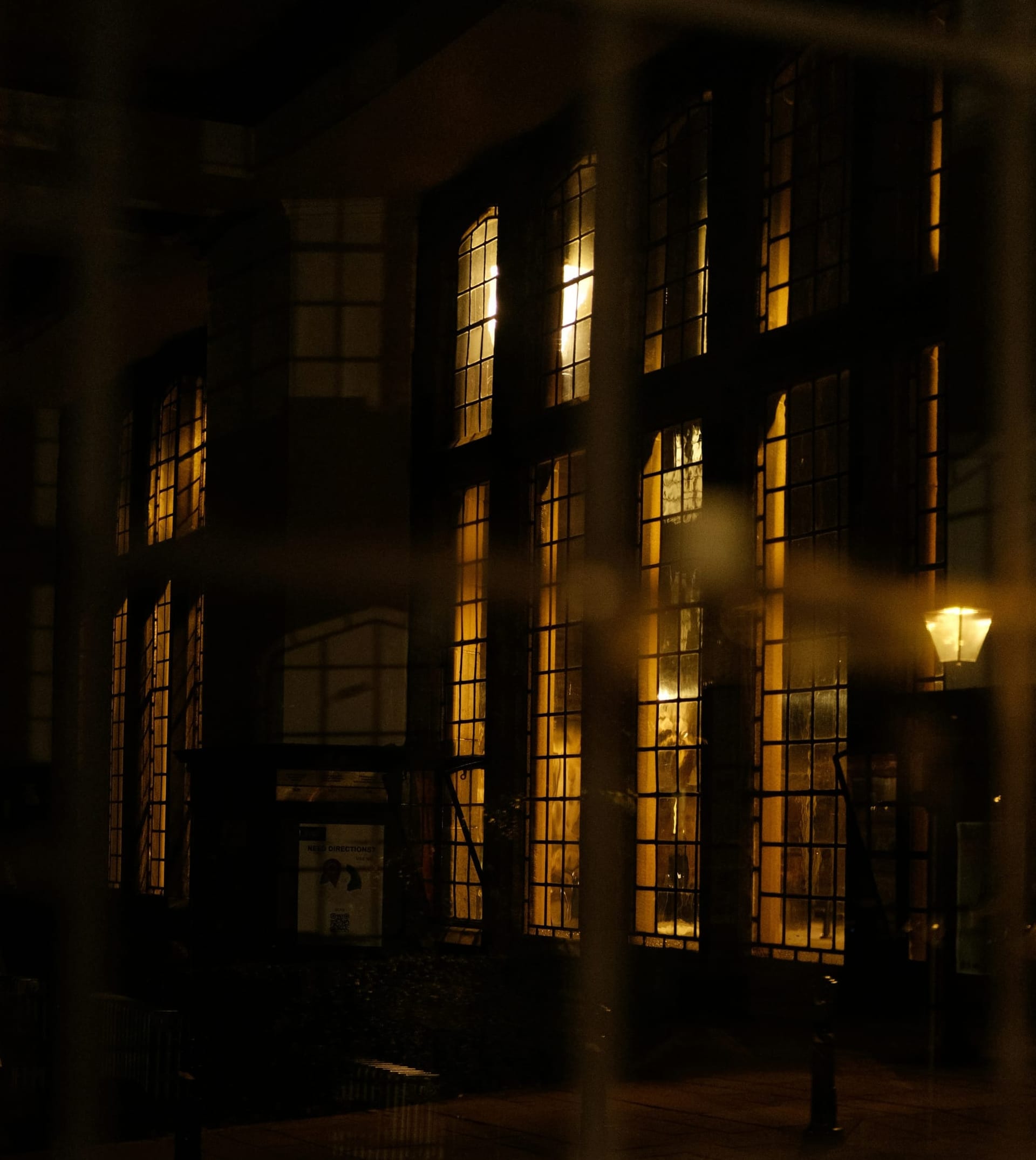
He knew the city streets better than they knew themselves, by day and by night. And why not? He was, after all, Glasgow’s oldest resident. He had watched the monks lay the flagstones and brew their beers. He had hidden with the lepers. He had enjoyed the lascivious spoils of the tobacco barons and, over long years, he had lived in every part of his city. He was his city.
For the last two decades, a mere blip to him, he had taken refuge in the old Govan Ironworks, the Dixon Blazes, which had been decommissioned in the sixties. But a vampire who had learned how to live in the day, in a part of Scotland where sunlight was a frequent stranger, needed something to occupy his time.
Mr Ferric was an ancient creature of the night, one who embraced the cold emptiness of the dark, but he sought edification as well as consumption. And so, he was abroad in his city again, and found it was 1983.
He found that the city had forgotten him. His existence as a feared outsider had morphed from myth to non-existence. The city itself had become a crypt, its crumbling walls and barren wastelands like a world that had moved on and left Glasgow behind. Oh, its people were yet valiant, yet proud. But Mr Ferric had seen the city in a thousand states; he had witnessed its rise and fall. This felt different. He could sense the lasting impression of war and human industry, the inevitable collapse of decadence for the few.
He found himself wondering what great story the city might yet produce, and whether he might have another part to play. After all, this was his city. It pulsed for him, bursting with vivid, livid life. Mr Ferric fed well in those few weeks, fed well indeed.
Time and again he saw, from his shadows, a man with a fondness for cigars: one Pat Wallace. Mr Ferric realised, as he prowled, that the smoking man had claimed the night—his night. The man had crowned himself the king of the city’s underworld: a gang leader, a criminal. He was also selling white powder, which enslaved many Glaswegians and brought them, like wraiths, to their ruin.
Though he loomed nearly seven feet tall, and though his face was so pallid it would light a darkened corner like a reflection of the moon, Mr Ferric spied on Mr Wallace: unseen, though not unfelt, like a bitter gust of wind through a dark alley.
Mr Wallace dispensed with people with whom he did not see eye to eye. His minions made a poor show of this. At first, it allowed Mr Ferric to feed opportunistically. But then came revelation, and he digested it like a piece of succulent meat.
He would offer a service to this Mr Wallace. A very… special service.
Pat Wallace sat, his legs stretched out and his leather shoes rubbing against each other, reading his racing card. He had the garage to himself that night, and he loved the smell of oil and grease.
This night, however, Pat found his palace of solitude pricked by an obscure feeling. He checked outside, but all was still. Pat was the hardest of Glasgow hard men, and it had been many years since he had tasted true dread. That, he realised with a shudder, was the sensation gnawing at the back of his neck. He closed the garage door.
There, standing like a gargoyle atop a Gothic spire, was a white-faced man who must have been at least seven feet tall. Pat spat his cigar out and dashed to grab a tyre iron.
“Who the Christ are you, pal?” he barked.
“My name is Mr Ferric. I’d be grateful if you could lower that piece of metal, Mr Wallace. I have a proposition for you.”
“You ken who I am—and you’re here all the same?”
“I am, Mr Wallace. But you have no idea who I am, and we shall remedy that. I have something to offer. My services.”
Pat found his throat as dry as the grave. His heart pounded, aching to be free of the stare of this pale golem.
“Your men do not clean the messes they leave behind. A killer should leave no trace, Mr Wallace.”
Pat’s grip on the tyre iron intensified, and beads of sweat appeared on his brow. “Right, big man. No more messin’ about. State your business.”
Mr Ferric had enjoyed so very few conversations over the last hundred years or so. This was sport; a joy. “I can make your enemies disappear,” he drawled.
"What, are you some sort of magic man?” said Pat.
“You need someone to clean up your little operations. That person is me.”
“And I suppose you have a day rate?”
“A day rate? Wouldn’t this be strictly night work, Mr Wallace? I need no payment. The people you wish to disappear… they will be my payment.”
Pat swallowed, his throat drying. The tall, white-faced man had the strangest accent. Glaswegian, certainly. But there was something else there too—something old and dusty, like a leather-bound book taken down from a library shelf after lying undisturbed for a century.
But above all else, Pat was a pragmatist. Whoever this pallid devil was, he had Pat bang to rights. Pat had plans for Glasgow, and certain people were obstructing those plans. If this Mr Ferric could make them go away, no questions asked, who was he to look the other way?
“Okay, magic man, you’ve got a deal. Let’s do business.”
Pat held his hand out, and his furling lips quivered into an uneasy smile of accord. Mr Ferric reached out and gripped Pat’s hand. Pat felt his blood pump toward that hand, drawn to it somehow.
Mr Ferric did not return Pat’s smile. Giving his new business associate a glimpse of what lurked beneath his lips was best avoided… at least for now.
About the Author
*** writes fiction under the pen name J.S. Apsley. Based in Glasgow, Scotland, he is an author of Glasgow and Scots noir, crime, and horror stories. His work blends gritty urban realism with elements of suspense and the uncanny, drawing on the atmosphere and histories of Scottish life.
Subscribe to my newsletter
Subscribe to my newsletter to get the latest updates and news