
West of Moscow
by Curtis M. Revis Seubert
August, 1991. Moscow, Idaho.
The apartment building was old enough to belong to another century: tall windows, a wraparound porch, a walnut tree crowding the yard. Jutting out from the roof, a windowed gable with no visible door or staircase looked abandoned.
The second-floor apartment smelled like wet towels, cigarette smoke, and coffee burned hours ago.
Jeff stood shirtless in front of the bathroom mirror, dragging a disposable razor across the hollow beneath his jaw while the college station, KUOI, muttered through the bedroom wall. The DJ was complaining about another Seattle band getting too big too fast. The signal faded in and out beneath static. The voice returned, extolling listeners: “Don’t buy into it. Resist!”
Behind him, Amber sat cross-legged on the mattress in one of his t-shirts, reading the dense photocopied text of clinic pamphlet for the third or fourth time, ignoring the hotline numbers at the bottom.
Neither of them had mentioned it for almost twenty minutes.
He rinsed the razor.
Pink water spiraled briefly through the sink before disappearing.
“You don’t have to come with me,” she said, folding the pamphlet along already creased lines.
He looked at her in the mirror. “I know.”
“They said it’ll probably take a week, maybe two.”
“Okay.”
She folded the pamphlet smaller. Unfolded it again.
Outside, someone shouted in the parking lot. A car stereo thumped once, hard enough to rattle the window glass, then faded away.
“They said everybody’s getting tested now,” she said carefully. “It doesn’t mean anything.”
Jeff nodded too quickly.
Last spring, his dorm roommate’s girlfriend had disappeared halfway through the semester. Rumors spread before finals: San Francisco. Nobody confirmed anything—in fact, everyone avoiding mentioning her name. Her parents came to clean out her dorm.
Jeff wiped shaving cream from his neck with toilet paper. Tiny cuts burned beneath the foam.
“You think I should be worried?” Amber asked.
The question hung there longer than it should have.
On the radio, the DJ laughed at something nobody else could hear.
Jeff tossed the razor into the sink.
“I think people worry too much about everything now.”
Even to himself, he sounded irritated instead of reassuring.
Amber watched him for a moment.
Then she nodded once, slowly, as if filing the answer away somewhere.
“At least I got to jump trains with Stacey,” she said.
Jeff leaned against the sink. “Yeah.”
“You still jealous about that?”
He shrugged.
“I don’t know. Maybe.”
A long burst of static swallowed the radio station completely before the music returned.
Jeff said, “I’ve been thinking maybe I should take off for a few days before classes start.”
Amber looked up at him carefully now.
“Take off where?”
“Coast maybe. Highway 101.”
“Hitchhiking?”
“Why not?”
She looked toward the window. “When?”
“I dunno. Day after tomorrow maybe.”
Amber nodded once.
Then, after a moment: “You planning on being back before I get the results?”
Jeff turned toward her and forced a smile that felt strange on his face.
“Probably.”
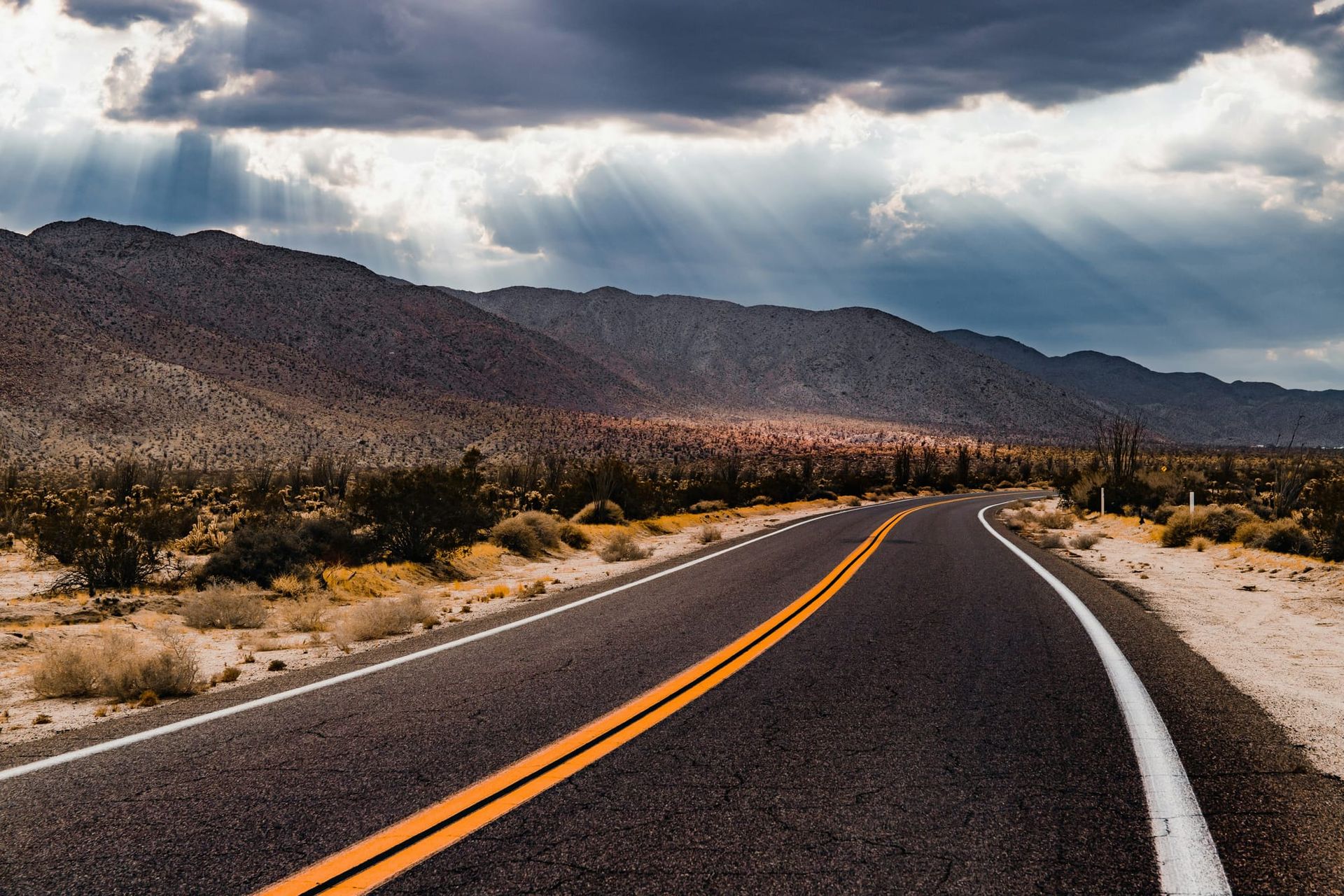
Three days later he stood on the shoulder of Highway 101 beneath a white sky that smelled of salt and hot pine bark, wondering whether he had already made the biggest mistake of his life.
Cars hissed past without slowing. Huge RV’s with California plates nearly blew him over in their wake.
His backpack dug into his shoulders. Sweat darkened the brim of the floppy green felt hat he’d stuck a daisy into somewhere outside Coos Bay because he’d liked how stupid it looked.
The ocean appeared only in flashes between the trees.
He walked.
That first evening he reached Sunset Bay just before dusk. The beach curved inward like a giant yellow claw, black rocks rising out of the surf at the northern edge while waves boomed against them with slow artillery rhythm.
He’d bought two beers from a roadside store. He drank one sitting on top of a picnic table while gulls wheeled overhead.
The second beer stayed unopened beside his tennis shoe.
All around him people were arriving to watch the sunset as though it were an event rather than something the world did every day without asking permission.
Families. Couples. Old retirees with cameras around their necks.
Nobody paid attention to him.
That comforted him.
On his way to the toilet, he paused to watch a man and woman watching a huge slug make its way across the pavement. They waved people around it.
Later, after the sun vanished and the beach emptied, he sat with two bicyclists from Eugene named Eric and Ellen—the man and woman who’d protected the slug from errant feet or tires—and listened to an older man explain why he switched from collecting cans to digging clams.
“Used to be this beach was full of cans every morning,” he said. “Locals and tourists drank beer, partied, left everything behind. I’d make twenty, thirty bucks some weekends cleaning up after them.”
He shrugged.
“Now everybody’s environmental.”
They also listened to him explain why the recent photographs of a comet striking Jupiter had been faked.
“Nothing changes in space,” the man insisted, gesturing upward with his cigarette. “People need catastrophe. That’s all this is.”
Ellen laughed uncertainly. “You don’t think comets are real?”
“I think television’s real.”
The clam digger smiled calmly, as if this settled everything.
Jeff bummed a cigarette from him. Eric and Ellen went to their tent.
The older man hung around for a bit after. He asked about Jeff’s relationship to the couple.
“Just met them today, same as you.”
“And you’re by yourself? Hitching down the coast?”
“Yep. Just me.”
“Haven’t seen many people doing that lately.”
When he finally drove away, Jeff remained sitting at the picnic table listening to the surf.
The stars above the Pacific looked cold and permanent.
Off past the restrooms, an RV’s generator roared to life. A single laugh.
He imagined Amber lying awake back in Moscow.
He opened the second beer.
The next morning, he mixed falafel powder and refried beans together in an old mess tin. Then he unpacked his treasured Svea camp stove.
The stove ran on white gas instead of canisters, which made lighting it feel less like cooking and more like preparing a small explosive. Using a child’s medicine dropper, he drew fuel from the tank and carefully squirted it into the shallow lip beneath the burner.
Then he lit it.
Flames whooshed around the stove for a second before collapsing inward as the fuel burned off and heated the tank. A moment later, he cracked the valve open. Pressurized gas hissed upward and ignited.
The thing sounded like a jet engine at full throttle.
Jeff glanced automatically toward the road and the empty ranger station. He knew he was camping illegally.
He heated the beans and falafel into a gray-brown paste and rolled it into tortillas.
Returning from the public restrooms where he washed his dishes, he found a couple and their child had taken his picnic table. He introduced himself and, pointing to his tent hidden in a nearby clump of bushes, explained his trip south. The woman introduced herself, then led the boy down toward the surf while her husband remained at the table. The husband—the much older husband, Jeff could now make out—stayed on the bench and talked to Jeff.
He turned out to be a former military communications specialist, retired, living not too far up the road. He and his wfie had gotten married and three years ago had their son.
“Way too old for this,” he said. “If you’re going to have kids, do it when you’ve still got the energy to tear after them. I was already past sixty when the kid was born.”
The man smoked constantly and spoke with a cheerful certainty about the ciclical history predicted by Mayan calendars. A full head of white hair, styled and elegant. A faint tremble in the fingers as they brought the cigarette to his mouth.
“The Internet’s gonna finish people off,” he said, exhaling a cloud of smoke.
Jeff, stirring instant coffee in a aluminum cup, thought of Gandalf.
“How?” Jeff asked.
The man smiled.
“People won’t know how to be human anymore. Everybody isolated. Everybody plugged into machines. Information moving too fast. Nobody thinking. Bad ideas spreading quicker than anybody can stop them.”
His son screamed happily in the surf below.
The man watched him with strange tenderness.
“We built the Internet thing on nuclear systems,” he said. “Death underneath everything. That’s America.”
Jeff laughed awkwardly.
The man did not laugh back.
“You built the Internet?” Jeff said.
“Me, yes, and a bunch of other guys. I sometimes think we were just trying to make death more efficient.”
“Think I can get a cigarette off you?”
The man lined up four cigarettes beside Jeff’s coffee cup. “You’ve got the right idea, getting out and about now.”
That afternoon Jeff climbed onto a rocky outcropping north of the beach and tried writing a poem in his notebook.
Mostly he watched the ocean.
Mostly he thought about money.
About student loans.
About wanting to become a writer despite every writer he knew being broke, drunk, or teaching freshmen composition to students who hated reading.
He sketched a piece of floating driftwood.
Mostly he thought about Amber not saying much before he left.
The tide rose slowly around him without his noticing. The sound of the waves lulled him into himself. He wrote about being alone in the corner of a room, the walls framing him like the sides of a coffin. Gulls cried overhead. The distant beach near the parking lot was filling up with colorful blankets and coolers.
Only when he looked around him did he realize the water had cut him off from shore.
Three yards of gently undulating ocean separated him from the empty, nearby beach.
It wasn’t far.
Still, panic hit instantly.
Sharks.
He knew how irrational it was. The water was shallow and clear enough to see rocks beneath the surface. Families swam in the distance. Children played happily among the waves.
None of it mattered.
He crouched low, stepping from rock to rock.
One foot slipped.
His chest slammed hard against stone before he splashed into the water.
For one terrible second he was certain something alive moved beneath him.
He lunged toward shore, stumbling through the surf half-crawling, half-running until he stood breathless on the sand. Nearby, two sunbathing women noted him with curiosity before closing their eyes against the glare.
His notebook was soaked through. The poem had dissolved into spreading blue stains and pulp. He stared at it for a long time before throwing it into the trash beside the bathrooms.
That night he lay awake in his tent listening to waves hammer the cliffs.
He slept badly, dreaming of dark water.
The farther south he traveled, the stranger the rides became.
A huge blond man with a dashboard Zen garden.
A retired journalist in a red convertible who first assumed Jeff was gay because of the flower in his hat. Then, when Jeff said he was taking some writing classes, the driver perked back up.
“My wife died two years ago,” the man explained casually while speeding along cliffs above the Pacific. “Kids think I’m losing my mind. They’re forcing me to visit this lady, but I don’t like to leave the house empty while I’m gone. I’ve got a house full of books and a word processor. Why don’t you housesit for a couple of days? I could even put a word in for you at the local paper, if you’re interested.”
Jeff declined the invitation for a job, but agreed to stay at the house for a couple days.
It was in a small town of rich-looking houses.
The house overlooked a wide swath of dark sand lined with driftwood.
Books covered nearly wall.
Jeff drank beer and tried writing stories in a dead woman’s house while the empty rooms creaked around him.
The next morning, he took a book to the beach and stayed there several hours.
When he arrived back at the house, Jeff saw the red convertible speeding out of the driveway, and two migrant laborers carrying backpacks and a puppy milling around the front yard.
Lacking other options, Jeff introduced himself, explained his situation, and asked what was going on.
The homeowner had invited them too.
“You think this guy’s dangerous?” the one who carried the puppy and the improbable name of Charlie Brown asked.
“Nah. Just lonely.”
The new arrivals put their gear into the bedroom.
They agreed to cook dinner together. Jeff told them he’d be making vegetarian burritos. They both looked relieved.
“We’re doing vegan,” one of them said. “Black beans, rice, and tofu.” He threw the tofu’s plastic container in the garbage under the sink.
Jeff thanked them, but stayed with his food.
Jeff slept on the couch again.
The man’s daughter arrived the following morning. The migrant workers urged Jeff to talk to her.
“This is something he does now. Picking up strangers, bringing them home. Trying to fill the place up.”
She folded her arms.
“Your father said it was okay,” he said as gently as he could. “Look, we really don’t know the situation, but I really think it’s up to him.
“My father is crazy,” she said flatly. “You all need to leave.”
She waited in her car in the driveway as Jeff and the others packed their things and left, Jeff walking towards the south-edge of town, the others towards the north.
As Jeff passed the “Thanks for Visiting Gold Beach” sign, he kept thinking about the empty house.
Not the strangeness.
The emptiness.
The idea that loneliness could hollow someone out enough they started collecting passing human beings like driftwood.
His next ride—a self-described hippy—had a few opinions about Jeff’s hitchhiking.
“You know how many hitchers or drivers are killed each year on this highway?”
Jeff admitted he had no idea.
“It’s dozens, man. This is, like, the most dangerous highway in America for hitching.”
“I haven’t had any trouble.”
“Yeah, well, it’s your gear, man. You should be just be carrying some clothes and a toothbrush.”
Jeff shrugged his shoulders. “Guess I’ve been lucky.”
They drove in silence for a couple more hours. He flipped over an “ABBA’s Greatest Hits” tape a few times.
Then, on an empty stretch of road, he pulled over.
“This is as far as I’m taking you, man.”
Jeff looked around, shrugged again, and pulled his pack out of the backseat.
Before driving away, the guy leaned out his window. “Just a word of advice: drivers pick up hitchers because they expect a little conversation. Word to the wise, you understand?”
In northern California he rode with a welder missing two fingers who had been driving nearly nonstop for three days after his wife left him. His name was Rick. Jeff tried the hippy’s advice.
“Where you from?” Jeff asked.
“Michigan.”
“That’s a long way away,” Jeff said with a smile. “What brings you this far from home?”
“Wife took the kids,” Rick said, his face unmoving. “Came home after work to an empty house. Got in the car. Been driving since. Three days.”
The floor of the passenger’s seat was littered with empty cans of Mountain Dew.
He kept saying it: “Wife took the kids. Guess I can’t blame her after everything. But, still. You wouldn’t do that to someone, would you?”
Jeff shook his head.
They stopped at a small tavern for lunch. Rick paid for them both.
Then shouted at Jeff in a supermarket parking lot for taking too long buying food.
Then apologized.
Then shouted again twenty minutes later because another car cut him off.
The entire ride felt like sitting beside exposed wiring.
When Rick finally dropped him near a campground beneath the redwoods, Jeff stood watching the taillights disappear and wondered whether the guy would make it home alive.
That night families launched fireworks over the river while children laughed around campfires.
Jeff ate cold french bread and cheese for dinner. He almost never broke out the stove anymore. It was too much effort.
For the first time on the trip he felt lonely.
Not free.
Lonely.
He lay beneath a picnic table in his sleeping bag listening to distant conversations drift through the trees. He wasn’t worried about rain—the sky was full of brilliant stars. He was worried about park rangers, again, though he hadn’t seen one this entire trip. He’d ducked under the gate at the camp site entrance.
By the time he turned north again and started hitchhiking inland toward Interstate 5, the trip had begun losing shape.
Days blurred.
Grocery stores.
Instant coffee. Instant rice.
ATMs displaying smaller and smaller numbers.
Gigantic RVs barreling south, scything the road’s shoulder clean.
Dust.
Sore feet.
Sunburn.
Music stores. With that woman’s poster in the window. He’d been seeing them in many of the town’s he passed through, sometimes in supermarket windows as well. He went into the next music store he walked past. A big poster behind the register showed the back of a man’s head with a barcode tatooed on it. The caption read: “You are the product.”
Behind the counter, a man in his early thirties greeted him, noting Jeff’s backpack.
“Hey,” said Jeff, “I’ve just gotta ask. I’ve been seeing these posters all the way down 101. Is she some kind of local celebrity?
“Who?”
“The lady in the poster in your window.”
The guy laughed once. “That’s Celine Dion.”
Jeff waited for him to continue.
They watched each other awkwardly for a few heartbeats before the guy asked: “Where you from?”
“Up north. Moscow, Idaho.”
“Moscow? Like in Russia?”
“Yeah, but cow like the animal, and in Idaho.”
“And you’ve never heard of Celine Dion?”
Jeff shook his “Nope. Should I’ve?”
They guy laughed again. “Don’t know. Maybe you’ve got some good music up there.”
Jeff’s next ride was with an old farmer too deaf to hear anything Jeff said.
He rode in the back of a logging truck while one logger patiently taught the other how to read using license plates.
He glimpsed redwoods like pillars inside some ancient drowned cathedral.
He passed square miles of clearcut and imagined a wandering herd of gigantic sheep.
Everything about hitchhiking felt temporary: climbing into moving things you couldn’t control and trusting they would take you somewhere coherent.
He made notes for a poem he never finished.
Jeff hitched east until he hit Interstate 5. It lay across the land like an open wound—gray, black, and gritty—running from Canada to Mexico. Herds of shipping trucks stampeded up and down the wide swaths of pavement, passenger cars like insects darting between them. Shredded tire debris trembled beneath concrete embankments.
Jeff stood at the edge of the highway, his thumb out in a shadowless landscape, imagining a stray car plowing into him, while unseen clouds of exhaust rolled over him. Heat shimmers rose from the pavement.
A jeep pulled over. The driver, a college student returning from vacation in California, agreed to drive him all the way to Eugene.
At the outskirts of Eugene, Jeff made a call from a public phone at a gas station, and two hours later, a car crunched through the gravel to park beside him. Wrapped in a thrift store army jacket, Zoe—a friend of one of Jeff’s university friends—climbed out of the car, all legs and smiles. She’d already agreed to drive him east toward Idaho at the end of his trip. “Jeff! You lived!”
She gave him a hug and a kiss on the cheek.
“We’ll crash at my brother’s house tonight, and leave before dawn. I want to get to Moscow before evening.”
Her brother took them to a local Ethopian restaurant for dinner—Zoe and her brother paid for everything.
Jeff took a long shower hoping the hot water would relax him. It didn’t work. He slept an hour or two at a time, waking in the darkness to hear cars passing on the nearby Interstate.
But he slept well in the car, which cracked Zoe’s perpetually upbeat veneer.
Just after crossing over the border between Washington and Idaho, they stopped at a gas station. Zoe called her friend in Moscow to make sure she had a place to stay. Her friend mentioned a gathering near the river.
“Bands and camping or something,” Zoe relayed to Jeff. “Couple hundred people maybe.”
Jeff almost said no.
Then he said yes immediately.
Greenstock sprawled across a bluff high above the Snake River, north of the highway.
No fences.
No tickets.
No organizers anyone seemed able to identify except the land’s owner, and he’d made himself scarce once the first hundred people had arrived.
The roadside below and the gravel bar beyond it were packed with battered vans, pickup trucks, small cars, and people milling around trying to get their things together.
Zoe and Jeff got out of the car and looked up to where a few tents peeked above the ridgeline.
“It’s a goddamn cliff,” Zoe said. “We have to climb that?”
The faint outline of a switchback trail was just visible in the fading light. Scattered groups of people were trudging up it. Only a few individuals moved downwards.
“Do you have any food?” Jeff asked.
“No, but my friends here do. How about you?”
“I asked you to stop at a store on the way.”
“Couldn’t. Anyways, we stopped at the gas station. You got beer.”
“Yeah, and some jerky, but that’s not going to be enough.”
“You don’t know. Come on,” she said, pulling a small suitcase from the car. “It’s almost dark as it is. I’m sure you’ll work something out.”
Jeff hoisted his pack onto his back and followed her.
There hadn’t been much to see from below, but once they reached the top, sweating despite the cooling air, they could see about a hundred tents jammed together about 200 feet deep from the ridgeline. There might’ve been more further off—weaving flashlights suggested some people might be staying out there.
The entire tent city smelled like weed, musky sweat, sweet patchuoli, and campfire smoke.
Nobody seemed worried.
Nobody seemed sober.
Several people were constructing the skeleton of a stage off to the side. A generator chugged behind a cigarette burned bedsheet nailed up as a backdrop while an arguing couple tried organizing stacks of cassettes beside the PA.
Jeff loved it instantly, and drank constantly.
He found a space and set up his tent on the hard packed earth ground.
He set up his stove and boiled water. Into this he put the last of his instant rice and refried beans. A man in the neighboring tent watched him.
“You’d do better to cook inside your tent. Less dust getting into your food.”
Jeff looked at the food in his post. Whatever dirt had floated in was invisible and, probably, unnoticeable. Then it hit him.
“You cook in your tent?” Jeff asked incredulously.
“Yeah.”
“Dude. That’s fucked up. You shouldn’t do that.”
“Peace, dude,” the other man said, ending the conversation and going back into his tent.
When he ran out of his own six pack of Heineken, he bought a couple cans of Coors from an enterprising tent near the trail head.
He met a girl. They danced around a campfire to “Riders on the Storm,” kicking up clouds of dust and teasing each other. She took him to her tent. Squeezed between her tentmates, she giggled as she blew him under the unzipped sleeping bag.
He woke to the smell of smoke and flint. People inside the tent were smoking cigarettes, flicking ash outside the door.
The girl from the previous night thanked him, gave him and hug and a kiss sour with beer, and then pointed to the exit. “You need to go.”
Outside the tent, a few people were standing around a small campfire. One was kneeling, tending to something just above the flames. He had dreadlocks and a stained, ratty wool sweater.
It was a charred snake.
“Found this on the highway,” the guy proclaimed.
“You’re not going to eat that, are you?” a spectator said.
The guy took a nibble out of the roadkill snake, grinning manically.
Everyone let out a groan. Jeff walked away. He was hung over and hungry. He’d already finished the jerky.
Later, he found the campite of a group of friends. They’d been among the first to arrive. Their three tents housed about ten people and three dogs. Someone was tying a pair of black and red plaid boxers to a tall stick to act as their homing flag. Another was patching a Birkenstock with duct tape.
One of them said, “A bunch of the local bands are making their way here now, dude. None of us are planning to sleep tonight. We’re gonna get some acid and dance all damn night. Before that, though, a couple of us are going to help them haul their gear up from the road. Think you could help with that?
“Any chance food and water for that?” Jeff asked.
“No problem, dude. We’ve got plenty of food. Water, though,” he said, gesturing around the hundreds of people wreathed in dust and dirt. “We’ve been getting some from the horse trough over there, same as everyone else.”
He walked Jeff over to the long line of people. There was a horse trough in a small area enclosed by a fence, but, to Jeff’s instant relief, it was fed by a water hose tied to a post. People would fill up canteens or bottles and then move on. Those who tried to fill coolers were booed away. Some, like Jeff, had no containers, and just drank straight from the hose. The mud around the trough smelled like horse piss; the bottom of jeans and tennis shoes were soaked with it. He could see the surrounding rock-strewn hills were full of people making their way back to camp from hopefully distant toilet runs.
Jeff drank until he felt sloshy, and then moved on.
That was water figured out, Jeff thought. Now for food, beer, and acid.
The sun was still low in the sky when they made their way down the cliff to a van parked nearby, packed with soundgear. They got all of it up the hill by the time the bands started arriving and needing help with their gear.
“Dude, one drum set’s gotta be enough, right?”
“I ain’t playing without my Mesa Boogie.”
For the most part, though, the bands that showed up to play were there for exactly that: to play. Or, more specifically, to play for that crowd.
Jeff got a several sandwiches and another six-pack out of the day’s work. He ate one sandwich, drank some more water, then took a nap.
The inside of the tent was still bright—and still smelled of beer and mud—when someone nudged him awake.
“Jeff, we scored.”
His friend, Keith, handed him a tiny square of aluminum.
“Rosebud, dude. Five dollars.”
Jeff handed him the money.
He unwrapped the single white square of paper inside. As was its namesake, it was printed with a red rosebud on top.
“I’ve never taken acid before,” Jeff admitted.
Keith laughed. He pulled the tent flap back, showing the jeans and flannel wrapped people passing by outside, the miasma of tents, the transient dog packs dodging between feet, the grins wreathed in dust, people laughing, hugging, kissing, and shouting.
“Couldn’t plan a better place or time than tonight, dude.”
Someone walked by, shouting: “I lost my peaches. Anyone found my can of peaches?”
The Rosebud crept up on him slowly.
At dusk, he sat atop a small bluff overlooking “the stage.” Hundreds of people had crammed themselves into the space between it and the rocky outcropping that Jeff and maybe another hundred people stood or sat on while watching the show unfold beneath them. His jeans were still damp where someone had spilled beer on his leg. He’d tried to eat a sandwich, but he’d seen the mud and dust caked under his fingernails and had no water to wash with. His stomach had revolted, and he’d slipped the sandwich in a tent pocket for later.
The bands played with abandon. The overtaxed generator never failed. The gear was unreliable. The sound sucked. No one cared.
Jeff felt like anyone in the crowd looking back at him would’ve seen nothing except a huge pair of eyes shinning in the dark above a mad smile. Which is how everyone standing or sitting around him looked to Jeff.
He waited for the hallucinations. There weren’t any. There wasn’t enough light to be any, he figured. Just everything was intensely focused in what light there was, and most of that was coming from the stage.
His hair felt both coldly metalic and electric. When he brought it to his mouth, it smelled like ash and tree sap.
The surrounding hills danced with fireflies.
No: those were the flashlights of people shitting near the camp.
Slam Suzzane played. Evil Chuck played. Thinkfeed played. Some hippies set up a drum circle and played. Jeff didn’t know if it was getting close to sunrise or not. He didn’t care. He dove into the swirling crowd.
Over the swirling mass of people and the stage hung a cloud of dust illuminated by the stage lights, a protective blanket blocking the sky from view.
People’s laughter arrived half a second after mouths moved. Bodies slammed into him like particles in an accelerator. And always the grins and the eyes watched from the bluff above.
He’d lost his friends hours ago. Or he hadn’t: sometimes he catch a glimpse of one of their faces in the crowd, but since he didn’t like to see people’s face right now, he kept his eyes down while he hopped up and down or swayed side to side.
He danced.
Scattercreek, a Moscow band Jeff had watched a few times before they’d moved to Seattle’s growing scene, took the stage. They’d driven all day once they’d gotten word of the gathering. Their music drove through his bones like freight trains passing beneath a house.
So it took a long time for him to notice that the people surrounding him were a still fence around his gyrating ridiculousness. He looked up and into a face he recognized, but stood gaping, unable to place a name.
“Brad,” the bearded man supplied. “Jeff, right?”
Jeff nodded. “Brad.”
“You okay?”
Jeff nodded again. Smiled.
“You look pretty fucking high, Jeff.” Brad said it with a grin.
“Who is it?” someone in the circle asked.
“It’s Jeff.”
“Who?”
“Jeff?”
“It’s the guy who’s been building the library database.”
“This guy? He’s the workstudy guy?”
“What’re you on?”
It took another moment for Jeff to realize they were asking him the question.
“Acid,” he supplied proudly. “First time!”
One of the girls studied his face: dirty and blotched beneath patches with unshaven stubble. She laughed.
“He’s tripping balls.”
“You guys are the KUOI staff, right?” Jeff said, unsure.
They all nodded.
“You remember us?”
“Yes!”
“You remember you?” one of them joked.
“What?” Jeff said, his mind suddenly racing. What the hell did that mean?
A girl with glitter around her eyes came closer.
There was a fly in her hair. Jeff watched it seeming to get tangled deeper and deeper into the black strands.
“You okay?” she asked eventually.
“Amber.”
“My name’s not Amber.”
“Nevermind.”
“Yeah. You look scared.”
“I’m not.”
She smiled gently.
“Everybody here’s scared,” she said.
“Everybody here’s scared,” he repeated.
Around them, the guitar solo hissed through darkness like radio static.
The distant bonfires looked prehistoric.
The bassist from 84 Edwards moved like a skeleton.
Temporary tribes holding darkness back for one more night.
Fireflies everywhere.
No. Flashlights.
The guitarist’s solo resolved into a scream.
“Jeff, who’s Amber?”
There was concern in that voice.
Jeff shook his head. “I wanna dance.”
Without a word, they all turned, ignoring him, but keeping their protective circle around him. In it, he danced.
He thought about Amber alone in Moscow.
He watched the shadows of people behind the stage jumping off the cliff.
He imagined her sitting beside a telephone.
He imagined her hearing the word positive.
A single bottle rocket streaked over the stage. The entire crowd erupted in “FUCK YOU!”
He imagined not being there.
His step faltered. He tried again. Failed.
He tried to push through the two in front of him. They resisted.
“Let me out!”
One of them turned. “Where’re you going to go, Jeff?”
“Stop saying my name! I don’t know any of yours!”
People laughing, hugging. Teeth. Yellow. Grimy. Sour and stale breath crept into the dark between them.
Music dissolved into feedback.
Far below, moonlight flashed across the river like broken glass.
Jeff crawled into Zoe’s car the following afternoon. He was exhausted, filthy, sunburned, and still faintly altered around the edges.
Desipte Zoe keeping the air-conditioner on full blast, the sun beat down on him through the windows relentlessly. He covered his head in a sour-smelling shirt. It did nothing. The sunshine still seemed to pin him against the faux leather. More than once, he jerked awake from a dream of trying to squeeze a purple thistle in a flower press, and it screamed back at him.
He told Zoe about the dream, but she kept her eyes on the road, her lips closed, looking annoyed. He gave up.
When she stopped in at a small-town supermarket to get cigarettes and an ice-tea, he lied about not having any money. Instead, he sat in the car, looking at the small, black payphone booth next to the ice box, unable to convince himself to get out.
Back in Moscow, he emptied his mailbox—bills and notifications from the university. He climbed the stairs to his apartment.
The rooms smelled closed-up and stale after the coast. He opened a window.
Amber’s mug was still in the sink.
No music played.
No voices.
The answering machine blinked red beside the phone.
Jeff stood in the middle of the room staring at it.
Outside, somewhere across the parking lot, somebody blasted Alice in Chains from open car windows.
A lawnmower droned in the distance.
The machine blinked again.
Jeff sat slowly on the edge of the mattress.
He looked at the phone for a very long time.
Then reached toward it.
And stopped.
Curtis M. Revis Seubert lives in Shunan City, Japan, where they teach interdisciplinary studies in English at the National Institute of Technology. Their work lingers in the aftermath of events, when memory and silence leave people alone with meanings they cannot quite embrace. Influenced by deconstructive philosophy, experimental fiction, and the quiet, generative indeterminacies of quantum physics, they devote part of their time to preparing for the next natural disaster and the rest writing in a small room crowded with books, a Playstation, and a sleeping bag.
Subscribe to my newsletter
Subscribe to my newsletter to get the latest updates and news
Member discussion